
math about me worksheet pdf
Overview of Math About Me Worksheets
These free Math About Me worksheets blend personal data with basic operations. Students calculate age, favorite numbers, and daily habits, creating equations that reflect their lives. Teachers use the PDFs to spark discussion, assess skills, and personalize learning. Students share sports, linking math life.!

Definition and Origin of the Concept
Math About Me worksheets were first introduced in the early 2010s as part of a broader movement to integrate personal relevance into elementary and middle school mathematics instruction. Educators noticed that students often struggled to see real‑world connections of operations, so they began designing activities that asked learners to apply addition, subtraction, multiplication, and division to data drawn from their own lives—birthdays, family ages, favorite sports statistics, and daily routines. The core idea is simple: by turning personal facts into numbers, students create a bridge between the classroom and their everyday experiences, which increases motivation and retention. Over the past decade, the worksheets have evolved from number‑matching tasks to sophisticated exercises that involve algebraic expressions, percentage calculations, and data analysis. The evolution reflects a growing emphasis on 21st‑century skills such as critical thinking, data literacy, and self‑assessment. Today, Math About Me PDFs are widely available for free download, and many schools incorporate them into orientation days, activities, and formative assessment routines. The worksheets also serve as a foundation for later lessons in algebra, geometry, and statistics, demonstrating how personal data can be transformed into meaningful mathematical models. Teachers report that who complete these worksheets often display a heightened sense of ownership learning, as they see how numbers relate identities. Additionally, the worksheets provide an excellent opportunity for differentiated instruction, allowing educators to tailor the difficulty level by adjusting the complexity of the calculations or the depth of the personal data requested. These help students connect math to their lives, fostering engagement and understanding;

Benefits for Students
Students gain confidence as they see math reflect their daily life. Personal data sparks curiosity, making abstract operations tangible; The worksheets promote self‑awareness, improve problem‑solving, and support differentiated learning. Engagement rises, leading to better retention and a deeper love for math. daily!!
Promotes Student Engagement and Self-Understanding

Students who see their own birthdays, favorite foods, or daily routines turned into numbers feel a direct link between math and life. The worksheets ask them to calculate the number of days since their last birthday, the total minutes spent on a hobby, or the average score of a favorite game. By turning routine facts into calculations, learners experience immediate relevance and instant feedback. This relevance boosts intrinsic motivation, encouraging students to work harder and to ask follow‑up questions about why a certain number matters. As they write equations that describe themselves—such as “age × 2 = number of steps taken in a week”—they practice algebraic thinking while also gaining insight into their own habits. The process of collecting personal data, performing calculations, and interpreting the results fosters metacognitive skills: students reflect on how they approach problems, identify patterns in their own lives, and recognize the role of math in everyday decisions. The worksheets also provide a platform for collaborative discussion. In small groups, students compare their equations, notice similarities and differences, and discuss how numbers can represent diverse experiences. This dialogue reinforces social learning and builds a classroom community where each student’s story is valued. Additionally, the immediate applicability of the tasks reduces math anxiety. When the outcome is a number that the student already knows or can verify, the sense of mastery grows. Teachers can use the results as a springboard for deeper exploration, such as extending a simple addition problem into a multi‑step word problem that incorporates the student’s own data. The result is a learning environment that blends personal relevance with rigorous practice, leading to sustained engagement and a deeper, more personal understanding of mathematical concepts.

Typical Content of a Worksheet PDF
Typical worksheets feature 8–10 questions that ask students to calculate age, favorite number, or daily steps. They include basic operations—addition, subtraction, multiplication, division—and simple equations that use personal data. Answers are written in a neat table for quick review. Students write in grid.
Sample Questions and Math Operations Covered
Below are representative examples that illustrate the blend of personal data and elementary arithmetic found in a typical Math About Me worksheet PDF. Each question invites students to use facts about themselves—such as age, favorite number, or daily routine—to construct simple equations or perform calculations. The activities cover the four basic operations (addition, subtraction, multiplication, division) and encourage students to write their own formulas in a clear, organized format.

Age Calculation: If you were born in 2010, how many years old are you in 2026? (Use addition or subtraction.)
Favorite Number Equation: Your favorite number is 7. Write an equation that shows 7 multiplied by your age equals the total number of hours you have lived so far.
Daily Steps: On average you walk 5,000 steps each day. How many steps do you walk in a week? (Use multiplication.)
Homework Hours: You spend 1.5 hours on homework each night. How many hours do you spend on homework in a month (30 days)? (Use multiplication and decimal addition.)
Favorite Snack Calories: Your favorite snack contains 120 calories. How many calories do you consume if you eat 3 snacks a day for 7 days? (Use multiplication.)
Book Pages: You read 250 pages in a book. If you read 20 pages per day, how many days do you finish the book? (Use division.)
These sample questions exemplify how the worksheet uses real-life data to reinforce arithmetic skills, encourages students to write equations that reflect their own experiences, and provides a platform for teachers to assess both mathematical understanding and personal engagement.
Practice: calculate total minutes spent on homework and music every day!!!

How to Customize Worksheets for Your Classroom
Teachers can adjust difficulty by adding more complex operations, swapping personal data for class averages, or incorporating word problems. Personalization options include custom images, student names, and themed color schemes to match classroom decor. Add a photo or quote to personalize the sheet for fun now.
Adjusting Difficulty and Personalization Options
Adjusting difficulty in a Math About Me worksheet is simple yet powerful. Begin by selecting the basic operations—addition, subtraction, multiplication, and division—and decide which to highlight. For younger learners, keep problems short, using single‑digit numbers and reinforcing facts. Older or advanced students can tackle multi‑step problems, fractions, or decimals, and even craft equations from personal data. This approach deepens understanding and sparks creativity. Personalizing prompts makes the worksheet engaging: replace generic “favorite number” with “books read last month” or “score in your favorite game.” Adding a photo or themed icon boosts motivation. Provide guided examples for those needing support, and optional extension tasks for high‑achievers. A clear rubric helps students self‑check accuracy and creativity. Incorporating technology—calculators or simple spreadsheets—reinforces computation while staying personal. Pair students for peer review, encouraging communication and critical thinking about data. Allowing choice—students picking data points or operations—empowers ownership and aligns with student‑centered instruction. Finally, a brief reflection prompt helps students connect math to real‑world goals, deepening metacognition and relevance. This balanced mix of challenge, personalization, and reflection creates a dynamic learning experience for every student.
Teachers can also modify the layout by adjusting the number of questions, the length of answer spaces, or adding a scoring rubric that highlights both accuracy and creativity. Offering optional extension tasks, such as solving a problem that involves multiple operations or creating a short narrative that explains the calculation, encourages higher‑order thinking. By blending mathematical rigor with personal relevance, the worksheet becomes a powerful tool for fostering engagement and deep learning. Keep it.!

Downloading and Printing Instructions
Visit the free resource link, click “Download PDF,” then open the file. Print on standard 8.5×11 paper, double‑sided if desired. Save a copy for future use, and share with students via email or classroom portal. Ensure printer settings match the PDF layout. PrintOK
Step-by-Step Guide to Accessing Free PDFs
Open a web browser and navigate to the official teacher resource site that hosts Math About Me worksheets. 2. Locate the “Free Download” section, often highlighted with a bright button or banner. 3. Click the button labeled “Download PDF” to begin the transfer. 4. Once the download completes, double‑click the file to open it in your PDF viewer. 5. Verify that the document contains the 30 all‑about‑me sheets and that the formatting matches the printed layout. 6. If you plan to print, go to File → Print, select your printer, and choose “Fit to Page” to avoid clipping. 7. For digital use, save the PDF to a folder labeled “Math About Me” for easy retrieval. 8. Share the file with students via email, a learning management system, or a classroom drive. 9. Encourage students to keep a copy for reference during the school year. 10. If the file is corrupted, revisit the site and download again. 11. For accessibility, use the “Read Aloud” feature in your PDF viewer or convert the PDF to a Word document. 12. Finally, bookmark the download page so you can quickly return for updates or new worksheets. This simple, repeatable process ensures that every teacher and student has immediate access to high‑quality, personalized math content.
Teachers can embed PDFs into digital platforms, letting students annotate and discuss their calculations. Reviewing completed worksheets reveals learning styles, guiding lesson adjustments. Students reflect on how math links to their daily life, strengthening relevance and motivation. They confidence! and! see math! in now soon life!
Integration with Other Math Lessons
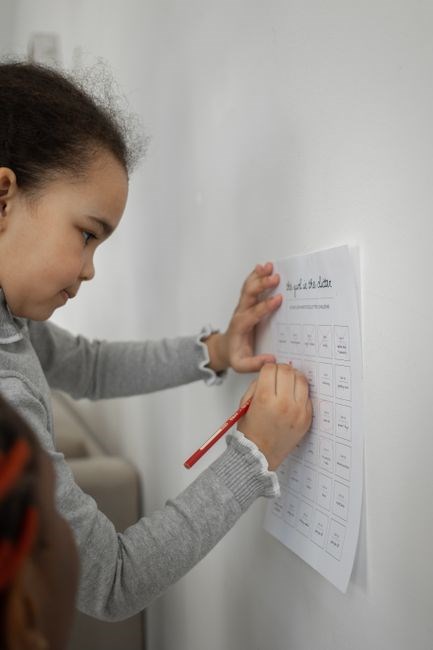
Use the Math About Me PDF to launch algebra by turning personal sums into linear equations. Students replace variables with their own data, then solve for unknowns. Geometry follows by measuring shapes tied to class activities. This seamless bridge boosts engagement
Using the Worksheet as a Hook for Algebra and Geometry Topics
Teachers launch algebra by turning data into equations. A student writes “My age plus my favorite number equals 30.” Replacing age with x turns it into a linear equation, giving a concrete context for solving unknowns. After mastering single‑variable equations, students pair data with a peer’s, creating systems that reveal how their lives intersect mathematically. Geometry follows naturally: students calculate the perimeter of a rectangle that represents their bedroom, using height and the length of a favorite book as dimensions, then compute area or volume based on real‑world objects. By anchoring algebraic and geometric concepts in data, students see the relevance of abstract math, boosting motivation. The PDF’s flexible format lets teachers add fractions, decimals, or multi‑step problems as students progress. Additionally, the worksheet serves as a formative assessment tool; teachers collect completed sheets, analyze common errors, and adjust instruction. This hook strategy eases the transition from arithmetic to higher‑level math and nurtures ownership, as learners see their identities reflected in the problems they solve. The worksheet also introduces graphing: students plot age versus favorite number, creating a scatter plot that illustrates linear relationships, then identify slope and intercept. Teachers incorporate trigonometry by calculating the angle of a ladder leaning against a wall, using height and distance as legs of a right triangle, applying sine, cosine, or tangent to a real‑world scenario. Students compare results, noting patterns! Such interdisciplinary connections deepen understanding and demonstrate math’s versatility in everyday contexts. The PDF can also serve as a collaborative project: students pair up, combine data to create joint equations, and present findings, promoting teamwork and communication while reinforcing reasoning. Finally, the worksheet’s open‑ended nature allows for extension activities: students design their own “Math About Me” challenges, incorporating advanced topics like logarithms or probability, sharing them with peers. This continuous loop of creation, analysis, and reflection keeps the PDF dynamic throughout the academic year.

Assessment and Feedback Strategies
Collect completed worksheets, tally correct answers, and use color codes to indicate mastery. Provide instant feedback by highlighting errors and offering hints. Encourage peer review, allowing students to explain reasoning. Summarize class performance and set personalized goals. Rubric to track progressand a improvements.
Collecting Student Responses and Analyzing Data
After students complete the Math About Me PDF, gather the sheets in a designated folder or use a digital form to capture responses. For paper copies, create a simple tally sheet with columns for each question and a space for the student’s name. This allows you to record accuracy and note common misconceptions.
Enter the data into a spreadsheet program such as Google Sheets or Excel. Use formulas to calculate totals, averages, and standard deviations for each operation. Conditional formatting can instantly flag answers that fall outside the expected range, highlighting areas where the class may need reteaching.
Analyze patterns by comparing individual scores to class averages. Identify which personal facts (e.g., age, favorite number) correlate with higher or lower performance. This insight helps tailor subsequent lessons—perhaps focusing on operations that students struggle with while reinforcing strengths.
Present the findings in a visual format: bar graphs for correct counts, pie charts for distribution of errors, and heat maps for difficulty levels. Share these visuals with students to promote self‑assessment, and discuss how their personal data influenced the math outcomes.
Finally, use the collected data to inform formative assessment. Adjust pacing, provide targeted practice, or introduce collaborative problem‑solving activities that address the identified gaps. Document the changes and monitor progress over the next units to ensure continuous improvement.
Create a dashboard for students to track weekly progress.
Related Posts
vinyasa flow sequence pdf
Find your zen! Download a beautifully crafted Vinyasa flow sequence PDF for free. Perfect for all levels – boost flexibility & reduce stress. Get started today!

illegal pete’s nutrition information pdf
Craving an Illegal Pete’s burrito but watching your macros? Download the official nutrition PDF! Find calories, carbs, protein & more for a guilt-free feast.

alto sax sheet music for beginners pdf
Just starting out with the alto sax? Find easy, free sheet music PDFs perfect for beginners! Learn to play your favorite tunes today. Download now!