vinyasa flow sequence pdf
What is a Vinyasa Flow Sequence?
Vinyasa yoga dynamically links poses with breath, creating a flowing practice; many seek Vinyasa flow sequence PDF guides for at-home routines, blending movement and mindfulness.
Defining Vinyasa Yoga
Vinyasa yoga, often called “flow yoga,” is a dynamic practice characterized by the synchronization of breath with movement. Unlike static styles, Vinyasa seamlessly links one posture to the next, creating a continuous, flowing sequence. The term “Vinyasa” itself translates to “arranging something in a special way,” perfectly encapsulating the intentionality behind each transition.
This style’s popularity, even attracting figures like Beyoncé, stems from its adaptability and engaging nature. While a Vinyasa flow sequence PDF can provide a structured routine, the essence lies in the mindful connection between each pose and the breath. It’s not merely about performing postures, but about the journey between them.
Many practitioners utilize downloadable Vinyasa flow sequence PDF resources to guide their practice, offering pre-designed flows for various levels. However, understanding the core principles allows for creative sequencing and personalization, making Vinyasa a versatile practice for all.
The Core Principle: Breath-Synchronized Movement
At the heart of Vinyasa yoga lies the principle of Ujjayi breath, a conscious and controlled breathing technique. Each movement is intrinsically linked to an inhale or exhale, creating a meditative rhythm that guides the practice. This synchronization isn’t merely about timing; it’s about using the breath to deepen the stretch, build heat, and cultivate mindfulness.
A Vinyasa flow sequence PDF often indicates breath cues alongside each pose, assisting practitioners in maintaining this vital connection. The flow isn’t dictated by the postures themselves, but by the breath that moves through them. This creates a dynamic, almost dance-like quality to the practice.
Whether following a pre-designed Vinyasa flow sequence PDF or crafting your own, prioritizing breath-synchronized movement is paramount. It transforms a series of poses into a unified, flowing experience, enhancing both the physical and mental benefits.
Vinyasa vs. Other Yoga Styles (Sivananda, Hatha)
Vinyasa yoga distinguishes itself from styles like Sivananda and traditional Hatha through its dynamic, flowing nature. While Hatha often holds poses for longer durations, and Sivananda follows a fixed sequence of 12 basic asanas, Vinyasa emphasizes the transition between poses.
A Vinyasa flow sequence PDF will demonstrate this fluidity, showcasing a continuous movement linked by breath. Unlike the static holds common in Hatha, Vinyasa builds internal heat and cardiovascular engagement. Sivananda’s emphasis is on spiritual development through precise alignment, whereas Vinyasa offers more room for creative sequencing.
Finding a suitable Vinyasa flow sequence PDF allows exploration of this dynamic style. It’s a more vigorous practice, appealing to those seeking a physical challenge alongside the mental benefits of yoga, differing significantly from the slower pace of other styles.
Common Poses in a Vinyasa Flow
Vinyasa flows frequently incorporate Child’s Pose, Downward-Facing Dog, Warrior II, and Plank Pose; a Vinyasa flow sequence PDF illustrates these foundational movements.
Foundational Poses: Child’s Pose
Child’s Pose (Balasana) is a resting pose frequently included in Vinyasa flow sequences, offering a gentle counterbalance to more dynamic movements. Often depicted in a Vinyasa flow sequence PDF, it’s a foundational asana accessible to all levels. This pose involves kneeling with your knees hip-width apart, then folding forward, resting your torso between your thighs and extending your arms forward or alongside your body.
It provides a mild stretch to the hips, thighs, and ankles, while also calming the brain and relieving stress and fatigue. Many Vinyasa flow sequence PDF guides recommend utilizing Child’s Pose as a transitional posture between more challenging poses, or as a moment for mindful breathing and centering. It’s a safe and restorative pose, making it ideal for beginners or anyone needing a moment of respite during practice. Variations exist, such as extended Child’s Pose, offering a deeper stretch.
Foundational Poses: Downward-Facing Dog
Downward-Facing Dog (Adho Mukha Svanasana) is arguably the most recognizable pose in Vinyasa yoga and a cornerstone of many Vinyasa flow sequences. Frequently illustrated in a Vinyasa flow sequence PDF, it’s a full-body posture that builds strength, flexibility, and stamina. Starting on your hands and knees, lift your hips up and back, forming an inverted V-shape with your body.
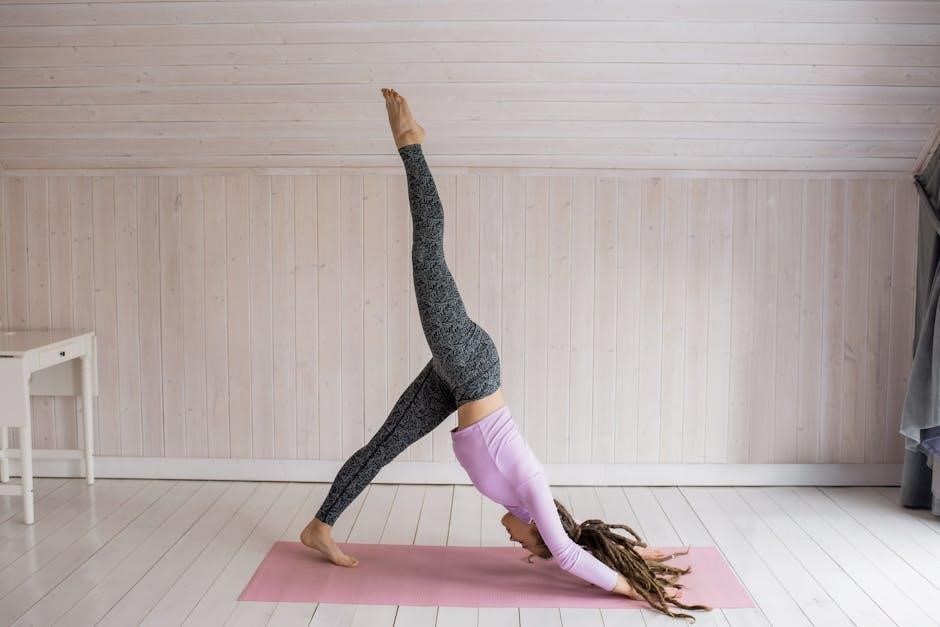
This pose stretches the shoulders, hamstrings, calves, and arches of the feet, while strengthening the arms and legs. It also encourages blood flow to the brain, promoting mental clarity. A Vinyasa flow sequence PDF often demonstrates how Downward-Facing Dog serves as a transition between poses, or a resting point within the flow. Beginners may modify by bending their knees, while experienced practitioners can deepen the stretch by straightening their legs and pressing their heels towards the floor.
Foundational Poses: Warrior II
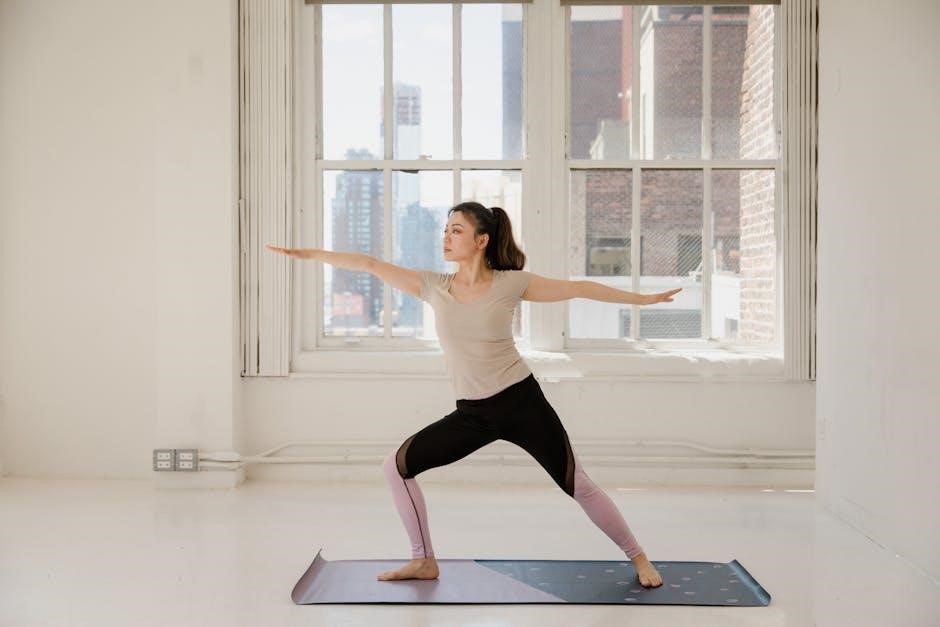
Warrior II (Virabhadrasana II) is a powerful standing pose frequently featured in Vinyasa flow sequences, and commonly detailed within a Vinyasa flow sequence PDF. It builds strength and stamina in the legs and core, while opening the hips and chest. To perform, step one foot forward and bend the front knee directly over the ankle, keeping the back leg straight and foot firmly planted.
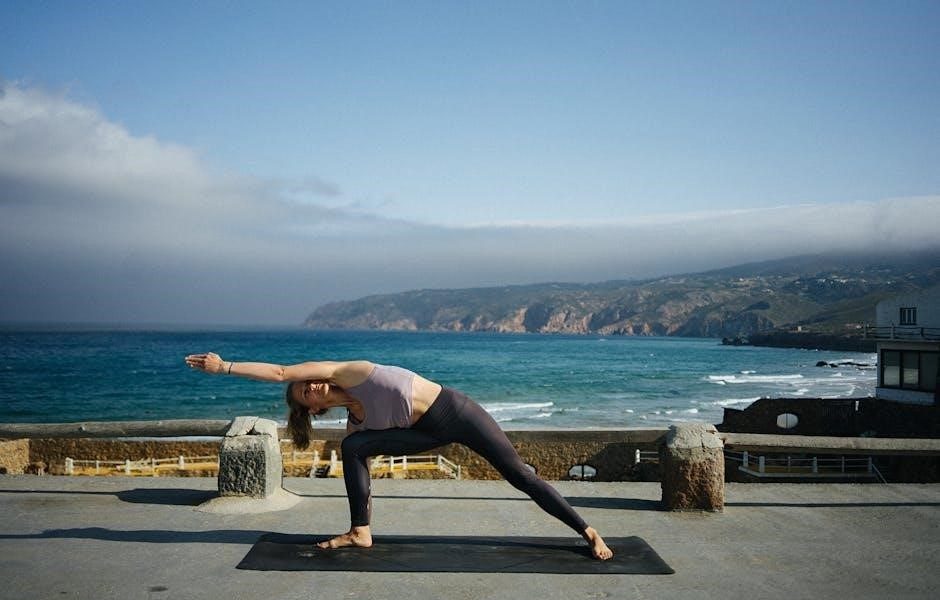
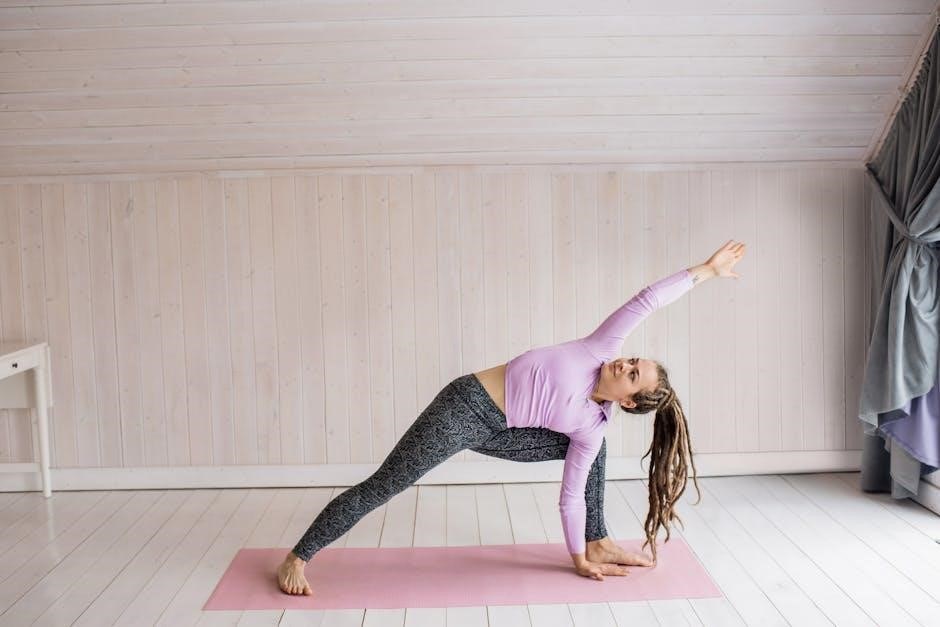
Extend your arms out to the sides, parallel to the floor, and gaze over your front hand. This pose cultivates stability and grounding. A Vinyasa flow sequence PDF will often show Warrior II as part of a series, flowing into Reverse Warrior or Extended Side Angle. Modifications include slightly bending the back knee for comfort, or reducing the depth of the front knee bend. It’s a foundational pose for building heat and energy within the practice.
Foundational Poses: Plank Pose
Plank Pose is a cornerstone of most Vinyasa flow sequences, and a pose frequently illustrated in a detailed Vinyasa flow sequence PDF. It’s a fantastic core strengthener, engaging the abdominals, shoulders, and arms. Begin in a push-up position, but instead of resting on your hands, place your forearms on the floor, elbows aligned beneath your shoulders.
Maintain a straight line from head to heels, engaging your core to prevent your hips from sagging or lifting. Breathe deeply and evenly. A Vinyasa flow sequence PDF often shows Plank as a transition between poses, like moving from Downward-Facing Dog to Chaturanga. Modifications include dropping your knees to the floor for support, or performing Plank on an incline. Proper form is crucial to avoid strain; a PDF guide can help visualize correct alignment.
Building a Vinyasa Flow Sequence
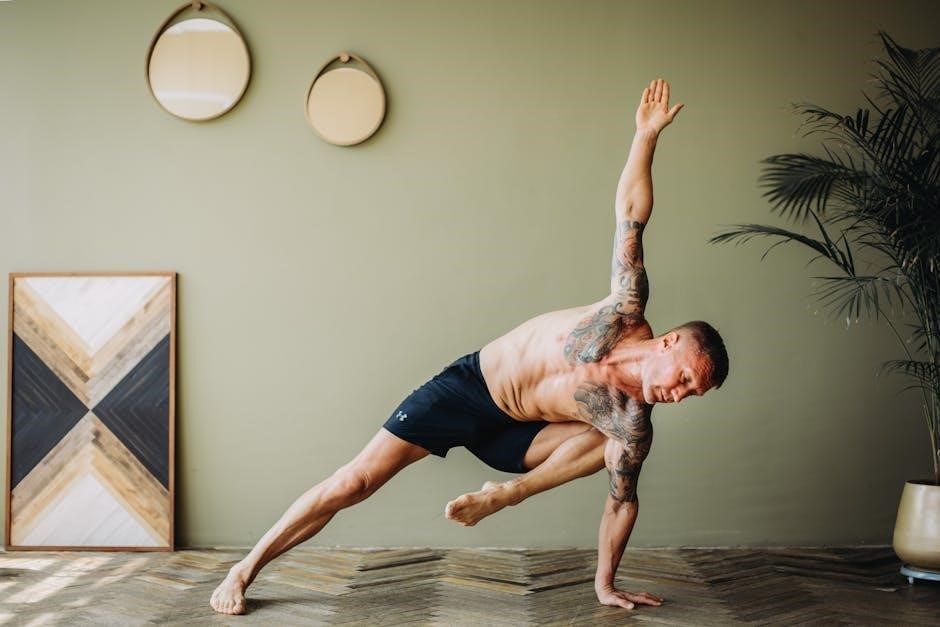
Vinyasa flow sequences, often found as Vinyasa flow sequence PDF downloads, typically include warm-ups, peak poses, and cool-downs, linked by breath and movement.
The Traditional Vinyasa Sequence (Chaturanga, Upward Dog, Downward Dog)
The cornerstone of many Vinyasa flows is the classic sequence: Chaturanga Dandasana (low plank), Urdhva Mukha Svanasana (Upward-Facing Dog), and Adho Mukha Svanasana (Downward-Facing Dog). This sequence, frequently detailed in Vinyasa flow sequence PDF guides, isn’t merely a physical transition; it’s a breath-synchronized movement building heat and strength.
Chaturanga, often a challenging pose, builds upper body and core strength. Many Vinyasa flow sequence PDF resources offer modifications for beginners, like lowering knees to the floor. Upward Dog opens the chest and strengthens the spine, while Downward Dog provides a grounding, restorative counterpose.
Understanding proper alignment in each pose is crucial, and Vinyasa flow sequence PDF materials often include detailed instructions and visual cues. Mastering this sequence forms a foundation for more complex flows, allowing practitioners to seamlessly link poses and deepen their practice. It’s a dynamic trio that embodies the essence of Vinyasa.
Sequencing Principles: Warm-up
A thoughtful warm-up is paramount in any effective Vinyasa flow sequence, and is often a dedicated section within a Vinyasa flow sequence PDF. It prepares the body for deeper stretches and more challenging poses, minimizing the risk of injury. Gentle movements, like cat-cow stretches and spinal twists, increase circulation and mobility.
Sun Salutations (Surya Namaskar) are frequently incorporated as a dynamic warm-up, gradually increasing heart rate and warming major muscle groups. Many Vinyasa flow sequence PDF guides suggest variations to suit different levels, from beginner-friendly modifications to more advanced options.
Focusing on breath awareness during the warm-up helps to establish the breath-synchronized movement that defines Vinyasa. A well-structured warm-up, detailed in a quality Vinyasa flow sequence PDF, ensures a safe and effective practice, setting the stage for a fulfilling flow.
Sequencing Principles: Peak Pose
The peak pose serves as the focal point of a Vinyasa flow sequence, often a challenging posture that builds upon the preceding movements. A well-designed Vinyasa flow sequence PDF will clearly identify this pose and structure the flow to progressively prepare the body for it. This isn’t about immediately achieving the pose, but building the necessary strength, flexibility, and stability.
Sequencing involves incorporating poses that open the relevant muscle groups and joints, and building heat through dynamic movements. For example, if the peak pose is a backbend, the sequence might include bridge pose variations and gentle heart openers. A good Vinyasa flow sequence PDF will illustrate this progression.
The peak pose isn’t held for an extended duration; rather, it’s a culmination of the practice, followed by a cool-down to safely release the intensity.
Sequencing Principles: Cool-down
The cool-down is a crucial, often overlooked, component of a Vinyasa flow sequence. Following the peak pose and more dynamic movements, it allows the body to gradually return to a resting state. A comprehensive Vinyasa flow sequence PDF will dedicate ample time to this phase, prioritizing restorative poses and gentle stretches.
Expect to find poses like seated forward folds, twists, and gentle backbends within the cool-down. These help to release tension accumulated during the practice and promote flexibility. Holding poses for longer durations (3-5 breaths or more) encourages deeper relaxation.
Savasana (corpse pose) is almost always the final pose, providing a period of complete stillness and integration. A well-structured Vinyasa flow sequence PDF emphasizes the importance of this final relaxation.
Benefits of Practicing Vinyasa Flow
Vinyasa flow builds strength, flexibility, and mindfulness; a Vinyasa flow sequence PDF helps access these benefits at home, reducing stress and improving cardiovascular health.
Physical Benefits: Strength and Flexibility
Vinyasa flow, when practiced with a well-structured Vinyasa flow sequence PDF, offers substantial physical advantages. The dynamic linking of poses builds considerable strength, particularly in the core, arms, and legs. Holding poses like Plank and Warrior II engages multiple muscle groups simultaneously, fostering overall muscular endurance.
Furthermore, the continuous movement and stretching inherent in Vinyasa significantly enhance flexibility. Poses like Downward-Facing Dog and Child’s Pose gently lengthen muscles and increase range of motion. Regularly following a Vinyasa flow sequence PDF can improve posture, balance, and coordination.
The practice also promotes proprioception – your body’s awareness of its position in space – leading to better body control and reduced risk of injury. Utilizing a PDF guide ensures proper form and progression, maximizing these physical benefits and allowing practitioners to safely deepen their practice over time.
Mental Benefits: Stress Reduction and Mindfulness
Employing a Vinyasa flow sequence PDF isn’t just about physical wellbeing; it profoundly impacts mental health. The synchronization of breath with movement encourages a meditative state, shifting focus away from daily stressors and towards the present moment. This mindful attention cultivates a sense of calm and reduces anxiety.
The rhythmic nature of Vinyasa flow, guided by a Vinyasa flow sequence PDF, can lower cortisol levels – the hormone associated with stress. Consistent practice promotes emotional regulation and resilience. The physical exertion also releases endorphins, natural mood boosters.
Furthermore, dedicating time to a structured yoga practice, even with a simple PDF guide, fosters self-awareness and body positivity. It provides a dedicated space for introspection and self-care, contributing to a greater sense of overall mental clarity and wellbeing.
Cardiovascular Health and Vinyasa
While often perceived as a flexibility practice, a well-structured Vinyasa flow sequence PDF can significantly benefit cardiovascular health. The continuous movement, linking poses like plank, chaturanga, and downward-facing dog, elevates the heart rate, providing a mild to moderate cardio workout.
Unlike static forms of exercise, Vinyasa’s dynamic nature challenges the cardiovascular system in a unique way, improving circulation and stamina. Following a Vinyasa flow sequence PDF regularly can contribute to lower blood pressure and reduced risk of heart disease.
The intensity can be adjusted based on individual fitness levels; beginners can modify poses or take breaks, while experienced practitioners can incorporate more challenging variations. Utilizing a PDF sequence ensures a safe and progressive approach to building cardiovascular endurance through yoga.
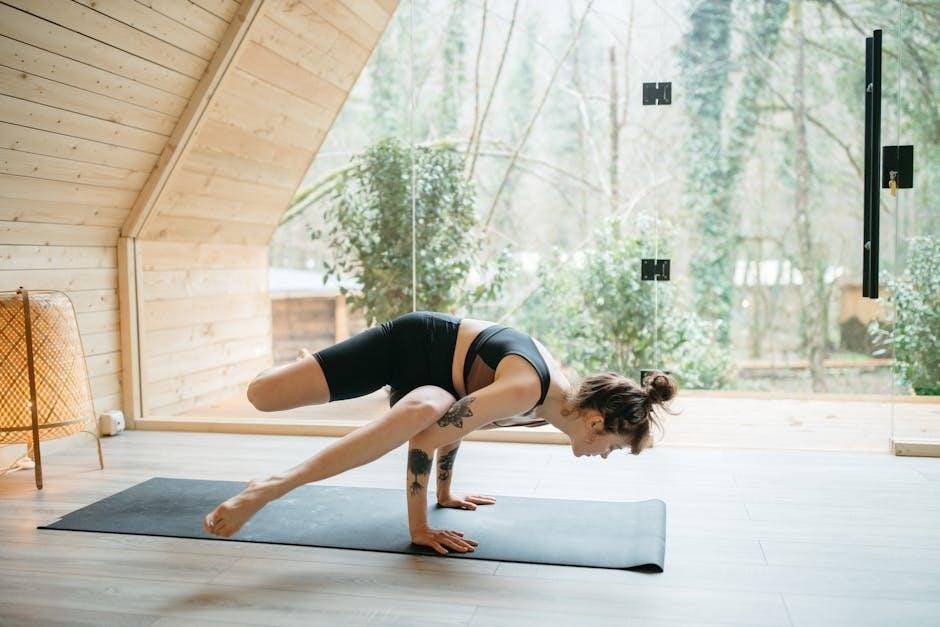
Finding Vinyasa Flow Sequences (PDF & Online Resources)
Vinyasa flow sequence PDF resources are readily available online, offering guided practices for all levels; YouTube tutorials also provide visual instruction and support.
YouTube Tutorials for Vinyasa Flow
YouTube is a treasure trove for those seeking Vinyasa flow sequence PDF alternatives, offering a dynamic and visual learning experience. Numerous channels specialize in yoga instruction, providing a wide array of Vinyasa flows suitable for beginners to advanced practitioners. Searching for “Vinyasa flow” or specific sequences like “morning Vinyasa” or “Vinyasa for flexibility” yields countless results.
Many instructors break down poses step-by-step, emphasizing proper alignment and breath synchronization – crucial elements of Vinyasa. The benefit of video tutorials is the ability to observe the movements and learn from visual cues. Look for channels with qualified instructors and clear audio. Some channels even offer downloadable Vinyasa flow sequence PDF companions to complement the video instruction, allowing you to practice offline.
Consider exploring channels like Yoga With Adriene, Boho Beautiful, or Fightmaster Yoga, known for their accessible and well-structured Vinyasa flows. Remember to listen to your body and modify poses as needed, even when following along with a video.
PDF Resources for Printable Sequences
For practitioners desiring a tangible resource, numerous websites offer Vinyasa flow sequence PDF downloads. These printable sequences provide a convenient way to practice yoga offline, without relying on digital devices or internet connectivity. Searching online for “printable Vinyasa flow” or “Vinyasa yoga sequence PDF” reveals a wealth of options, ranging from beginner-friendly flows to more challenging routines.
Many yoga studios and instructors also share Vinyasa flow sequence PDF resources on their websites as a way to engage with their community. These PDFs often include detailed pose instructions, modifications, and breathing cues. When selecting a PDF, consider your experience level and desired focus – whether it’s a gentle flow for relaxation or a dynamic sequence for building strength.
Websites like DoYouYoga and various yoga studio blogs frequently provide free downloadable sequences. Always ensure the source is reputable and the instructions are clear before attempting a new flow.
Considerations When Choosing a Sequence
When selecting a Vinyasa flow sequence PDF, several factors deserve careful thought. First, honestly assess your current fitness level and yoga experience. Beginners should opt for sequences explicitly labeled as such, focusing on foundational poses and gentle transitions. More experienced practitioners can explore challenging flows incorporating inversions and arm balances.
Consider your goals for the practice. Are you seeking stress relief, increased flexibility, or strength building? Different Vinyasa flow sequence PDF options cater to specific intentions. Pay attention to the sequence length; shorter flows are ideal for busy schedules, while longer ones offer a more immersive experience.
Review the poses included to ensure you understand proper alignment and have any necessary modifications available. A reputable Vinyasa flow sequence PDF will provide clear instructions and potentially visual aids.
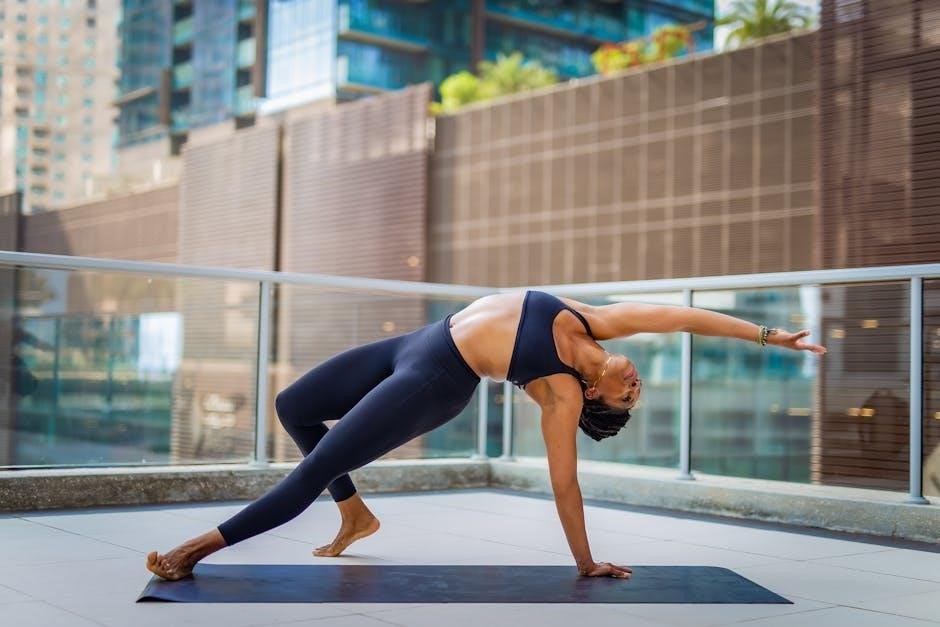
Modifications and Variations
Vinyasa flow sequence PDF guides often include pose modifications for all levels, allowing practitioners to adapt the flow to their individual needs and abilities.
Modifying Poses for Beginners
Vinyasa flow sequence PDF resources frequently emphasize modifications for newcomers to the practice. Beginners can utilize props like blocks under hands in forward folds or planks to reduce strain and maintain proper alignment. Dropping knees during chaturanga, or even performing it from the knees, is a common adjustment.
Downward-Facing Dog can be modified by bending the knees generously, focusing on a flat back rather than striving for straight legs. Warrior poses can be practiced with a shorter stance and a slight bend in the front knee. Child’s Pose offers a restorative option when needing a break.
Many PDFs suggest holding poses for fewer breaths initially, gradually increasing duration as strength and flexibility improve. Listening to your body and honoring its limits is paramount; don’t push through pain. Prioritizing proper form over depth ensures a safe and effective practice, building a solid foundation for more advanced variations later on.
Advanced Variations for Experienced Practitioners
Vinyasa flow sequence PDF guides for advanced yogis often introduce arm balances, inversions, and deeper backbends. Variations of Chaturanga, like the flying lizard or one-arm chaturanga, build significant upper body strength. Headstands and handstands, progressing from wall-assisted versions, demand core engagement and stability.
Experienced practitioners can explore variations of Warrior poses, such as revolved Warrior or Humble Warrior, increasing the challenge and deepening the stretch. Adding binds to poses like Triangle or Half Moon intensifies the practice. Backbends like Wheel Pose or Camel Pose can be explored with greater depth and control.
Advanced sequences frequently incorporate transitions like vinyasa krama, linking poses creatively and fluidly. PDFs may also suggest incorporating pranayama (breathwork) techniques to enhance the energetic effects of the practice, demanding mindful awareness and precise execution.
Related Posts

math about me worksheet pdf
Download the Math About Me Worksheet PDF and explore fun math challenges that help kids build confidence, boost learning, and enjoy learning with parents.

illegal pete’s nutrition information pdf
Craving an Illegal Pete’s burrito but watching your macros? Download the official nutrition PDF! Find calories, carbs, protein & more for a guilt-free feast.
alto sax sheet music for beginners pdf
Just starting out with the alto sax? Find easy, free sheet music PDFs perfect for beginners! Learn to play your favorite tunes today. Download now!